
Next week, I will be going down to Colorado Springs to meet with National team coach Jack Fabian and swimmer Eva Fabian as she prepares for the Pan Pacific Swimming Championships in Australia this August. We will be sharing training ideas and concepts using the Vasa Ergometer and the Ant + technology to help swimmers and triathletes perform at the highest levels.
Blog
Ironman World Championships Round 2
I was talking on the phone a couple weeks ago with one of my clients that is racing in Kona this October and I posed a simple question to him; Why do you want to do another Kona Ironman? I liked his response so much, that I thought I would share it. Possible it may help the rookie Ironman or a gentle reminder for the seasoned veteran on how to keep the balance.
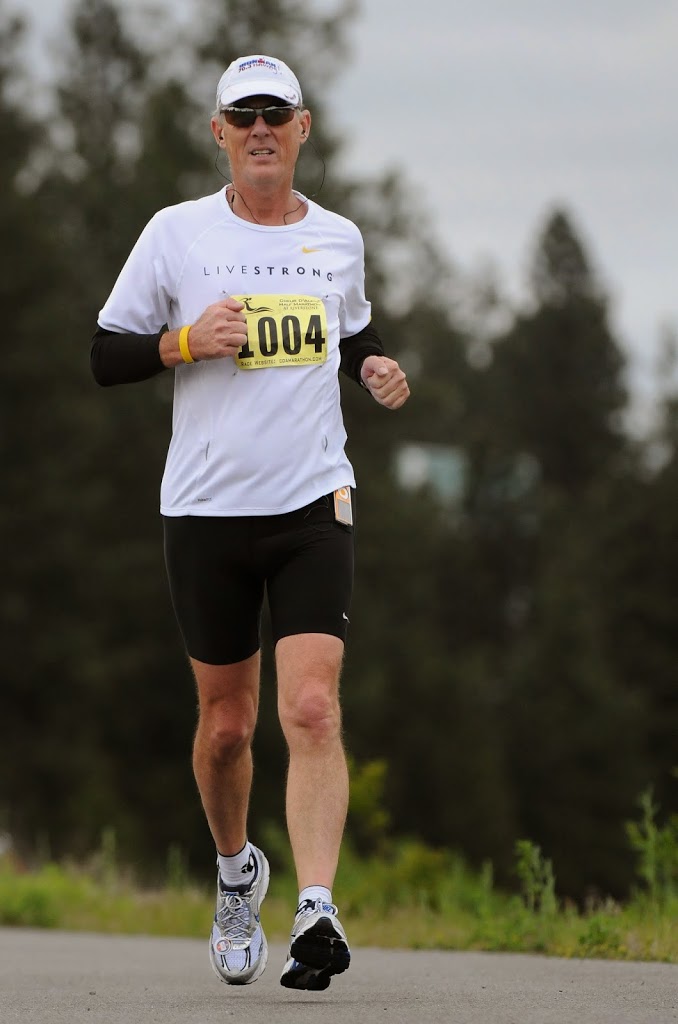
Bill Greentree
The first time you enter an Iron distance triathlon you really have no idea what you're in for. You might not even be sure just how you came to the decision to enter an Ironman race. Our reasons for wanting to complete an Ironman distance event go well beyond our desire for a brief moment in the spotlight. For some it's a natural evolution of their current sport or a lifetime of athletic endeavors. For others it's a fad, they just want to hear the famed “You are an Ironman!” (He doesn't say it every time by the way.) Some are just natural triathletes and want to give the long course a go. A very few are competitive by nature and want to one up someone they know. And then there are the pro's.
I'm not any of those. In fact, I spent most of my adult life avoiding any physical activity that could by any stretch of the imagination be deemed 'exercise'. At age 50 I was tired of being overweight and out of shape so I started a run walk program. I took absolute delight the first time I ran a full mile without stopping. Eventually a combination of factors led to my first triathlon, an Olympic distance race. Six months later in October 2011 at just under 55 years of age I did my third triathlon ever – the Ironman World Championship. I joked with people that the reason I was doing Ironman was because I was a runner in the “Mecca” of the long course triathlon world, Kailua Kona -- it's the only place in the world you have to apologize for being “just a runner.”
Even as an endurance runner with several standalone marathons under my belt, I really wasn't prepared mentally for just what simply completing an Ironman course during the hottest time of the year on Hawaii Island would entail. Your mind focuses on the upcoming race and there are likely as many reactions to that focus as there are people doing the race. A common reaction is paralysis through analysis. You become so intent on the end task (the race) that you can't figure out how to get there. For those of us with real lives it's easy to get overwhelmed with the myriad of details involved in training for three sports when you haven't done this before.
It's easy to succumb to the idea that training for a full length Ironman distance race isn't for the feint of heart or those with limited time to train. After all, it's Ironman for heavens sake. Unless you're careful, Ironman training can easily become a second job and as any person with two jobs, you find yourself becoming adept at juggling schedules, disciplined in following a training program and time management or you end up sacrificing other aspects of your life. That's where your coach comes in. A triathlon coach can take an enormous amount of that stress out of your life and allow you to focus on the task at hand, getting trained to compete. It's his (or her) job to keep that path to the finish line in mind for you. How you train for this or any other race is dependent upon your goals. Are you capable of finishing in the top 3% of age group athletes? Do you simply want to comfortably finish the race? Are you working with a disability or chronic injury? Each answer impacts your goals, priorities and just how you approach training.
Another common reaction to the prospect of an Iron distance race in the not too distant future is becoming overly task oriented. That is, focusing so much on the immediate task at hand that you lose sight of the big picture. The old adage that there's training and then there's racing isn't always true. Some of our workouts are designed specifically to apply to race day: flattening out the hills on the bike, training your legs to run properly when they feel like rubber after a 100 mile ride, simulating the fatigue you feel at the end of the bike ride at mile 20 on the run, etc. Task oriented myopia can lead to forgetting some of these lessons and having them painfully brought home during the race. As an airline pilot, I naturally fell into this category for my first Ironman race. My training program for the 2011 Ironman World Championship was more of a journey than a set of individual exercises. But I missed a lot of that journey by focusing on what I was trying to do rather than where I was going, how I was doing and what I was doing.
I am a runner. I had trained for and finished a December marathon the year before I started triathlons. My training, therefore, concentrated on swimming and building cycling skills and endurance. Running would take care of itself though it was neither ignored nor allowed to languish. What I recall the most are the long bike rides, five plus hours while trying to figure out your nutrition and hydration for those long rides. Anywhere else what we call “nutrition” would be called really bad candy. Oh and the bricks. For someone from a pure running background, bricks are an amazingly humbling experience. Your legs that have served so well on countless runs just don't feel right and you can't make them feel 'normal' anytime soon. But really, no matter how fit you are when you start the journey, you soon find yourself in the best physical condition of your life and you like it.
I hesitated a bit before I pressed the submit button on Active.com for this years race. The first time you have no clue what you're in for. I know better now. I pressed the button anyway. Maybe the answer really is what Frank Shorter said regarding marathons, “You have to forget your last marathon before you try another. Your mind can't know what's coming.” I have four months from the time I found out I had a Kona slot to race day. It's going to be a journey again. This time though, it's not my first rodeo. In fact it really isn't my second (It is my second time to the Ironman World Championship) rodeo either. For the first time I'm intent on maintaining the balance between the big picture and tunnel vision in the task of the moment. I also want to see just how far that commitment to enjoying the journey will go towards not avoiding the discipline I most dislike. Everyone has a discipline they most like to avoid, mine used to be swimming. It just might be fun to see how I do in October if I actually do all my coaches swimming workouts instead of putting them off.
There's also the complacency factor, been there done that; no big deal. The second time around is harder because you have been there before. Motivation, or rather the lack thereof, becomes a real factor. Plus it's a familiar course for me. That's a double edged sword. We know where the course compounds our personal weaknesses so we can train for it. It also is the proverbial sword of Damocles. We know what's coming. All that matters on race day is how you deal with the inevitable adversity; our winds are famous, it's the hottest time of the year, it's also on the edge of one of our rainy seasons – all on the same day sometimes! Overcoming those factors and finishing better than I did three years ago would be a coupe. But I will have fun again. But honestly there's another reason.
It's the last half mile that sucks you in. The finish line is a mere 800 meters away but seems to be a mere speck of light in an otherwise black hole. The music and voices you could hear so clearly out on the Queen Ka`ahumanu highway now sound startlingly muted and distant. Astonishingly the last bit of energy you've been trying to find for 10 km suddenly appears. Your pace quickens along a surprisingly empty road. Even in prime time it seems it's just you all alone on Ali`i Drive. A few elites are out enjoying a post dinner stroll (They can still walk?) and cheer you on (Dinner? How can they eat? Can it really be that late that they're done with dinner?). A spectator who's imbibed a bit too much staggers out onto the road to congratulate you. You really wish he hadn't done that, you're not done yet, besides changing course even by a step just isn't easy after 140 miles. This is what the four months of training and pain were all about – not the miles beforehand – this moment in time. This is why you want to do this. Suddenly a huge noisy crowd materializes yet ironically you hear your family and friends above the din. After listening to Mike Riley call in people for 2 or 3 miles it's your turn. And then it's over. Just. Like. That.
This years race will likely be my last time in the Ironman World Championship. It's rare in life that we get the opportunity to know that we're doing something for the last time. That knowledge is incredibly empowering. We can enjoy the journey, enjoy the sport we most dislike, enjoy the sport we really enjoy the most, enjoy the race and relish the finish. As Bullwinkle Jay Moose used to say, “This time for Sure!”
And I still think it's incredible when I run a full mile without stopping.
Aloha,
Bill
With a little over 3 months until Kona, I know that Bill is in a very good place and will do everything I can to help him enjoy the journey to race day.
Train Smart... Race Fast
Coach Eric
Progression workouts for sensible, flexible training!
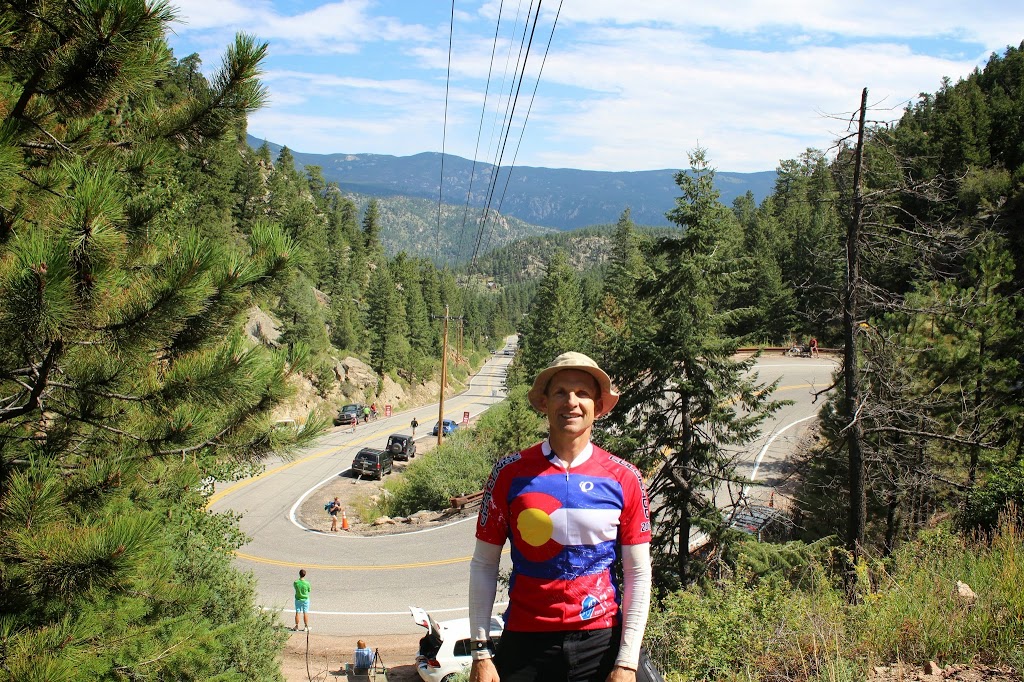
Training plans are written as a best case scenario, but there is no way for you or your coach to know how your body & mind are going to feel on a particular day. No way to know how much of a toll all the other stresses of life have put on you. How much sleep you have been getting, the quality of your nutrition/hydration, any injuries, work, family, etc... All of these things can factor into your workout for that day.
How fast you progress to in any particular training session will be based on the goals of the session and what your body & mind have available to deliver on that day. I like to give my clients workouts that are what I call "progression on feel". This allows them to listen to their body and progress to their limits for the day or if the body is a bit off, then just progress to what is available. I believe this helps keep injury potential down and continues to teach the athlete to listen to the signals their body is sending so they can keep training or recovering if that is the case.
Progression workouts are really quite simple, you start off at a pace you can handle and increase your intensity as the workout progresses. They are great for teaching athletes how to pace themselves at the beginning of a training session, so they will have enough energy to finish the session as fast or faster than they started. It is much better to dictate the pace you are going to move at rather than have the pace dictated to you because you went out too fast.
For those that train with power or heart rate, you can easily measure whether or not the intensity is increasing. While going on feel is great, the numbers don't lie and a good tool to use to compliment your training. Over time your feel will get better as your ability to gauge your perceived effort improves. This is important because you do not want to be a slave to the numbers and what happens on race day if technology fails you? You should have a very good idea what a particular effort feels like, and how long you can sustain it.
Remember that consistency in training is one of the keys to improvement. This coupled with a balance of stress plus recovery will enable an athlete to progress their training throughout the year. So try implementing a few "progression on feel" workouts during the coming weeks to help maximize the training that you do.
Train Smart... Race Fast!
Coach Eric
Want to Get Faster… Work on limiters, maintain strengths
Often times as a coach, I hear athletes state "I want to get faster but I don't know what to do". One of the easiest thing you can do is to identify your strengths and weaknesses (limiters) in the sports you do.
A Romanian sports scientist Tudor Bompa, Ph.D., did some of the early work on periodization and has shared his findings in a great book called. "The Theory and Methodology of Training". Joe Friel, has simplified things for the everyday athlete to easily understand and calls it "The Training Triad". You can read in more detail about this in one of his books, "Total Heart Rate Training", but here are the basics to get you started.
He states that in any sport, there are six physical abilities related to performance: Endurance, Force, Speed Skill, Muscular Endurance, Anaerobic Endurance and Power. He further states that endurance, force and speed skill are the "basic abilities" and muscular endurance, anaerobic endurance and power are the "advanced abilities". Athletes regardless of sport will need to develop their basic abilities to their full potential before the advanced abilities can be developed fully. The reason for this is to develop your muscular endurance fully you need both endurance and force. Anaerobic endurance requires endurance and speed skill while power requires force and speed skill. Beginner athletes will stand to gain the most by just working on the basic skills while a more seasoned athlete can devote time to the advanced abilities to improve performance as long as the basic abilities are maintained.
Identifying your limiters and subsequently learning how to train for them is a key ingredient to getting faster. This will make setting up your training plan whether self coached or using a coach a bit easier because you will know exactly what you need to work on. Make time to do your homework and you will be on your way to getting faster.
Train smart, race fast!
Coach Eric
1/2 Ironman Race Pace Swim Set
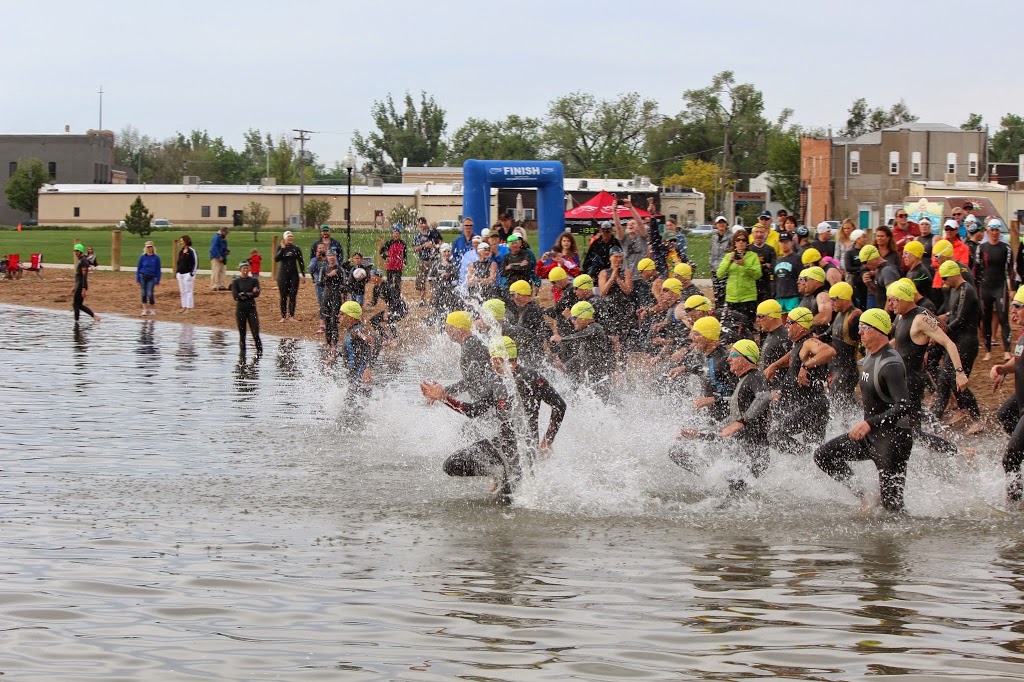
A month ago, I posted one of my favorite Ironman swim training sets and had a few people ask me what they could do to prepare for a 1/2 Ironman swim distance. The 1/2 Ironman distance is a little over 2100 yards or 1900 meters. Specificity of training is key, so it is important to do broken swims at or near race pace with some rest from time to time. If you can not swim race speed with rest, it is going to be VERY difficult to swim it with no rest.
The set
2100 Yards/1900 meters
Strong, but in control:
6 x 50 on short rest interval :05-10 sec. This helps simulate the beginning chaos of the race. Arms flailing around you, feet kicking, bodies pressed together. Best to get a little uncomfortable in practice with these 50's so race day will be less challenging. Think of swimming these 50's as a strong, broken 300 and that will allow you be consistent and not over achieve too soon.
Settling in:
3 x 300 @ :20 sec rest steady pace. Not a lot of rest, but enough to keep your swim speed honest. Try not to slow down too much from the initial swim speed of the 6 x 50's. So, if your 50's above were :40 seconds then you should aim for 300's around 4:05-4:10
Stay settled or pick it up:
3 x 200 (2 x 200 if Meters) @ :20 sec rest. Here is where you need to decide, do I stay on these feet I am drafting or possibly make and effort to pass and/or find feet moving slightly faster. By practicing this in training you will have a pretty good idea in a race at this point what you should do. So keep the pace the same as the 300's or pick it up 1-2 seconds per 100.
Finish strong:
6 x 50 on short rest interval :05-10 sec Graduay build the legs and hold on to your stroke biomechanics This will help minimize your chances of falling down when it is time to stand up and run to T1 and help the legs prepare for the bike.
A set like this could be done once every 2-3 weeks to help measure if you are improving and also dial in your swimming pace. Perception and reality are often two different things. For example if you are good on the 50's but fade on the 300's, chances are you went out too fast. If you get through the 300's knowing you can swim faster, you are in a good place and should be able to hold pace on the 200's or slightly faster.
Train Smart, Race Fast
Coach Eric
Get FASTER!….Get out of your comfort zone!
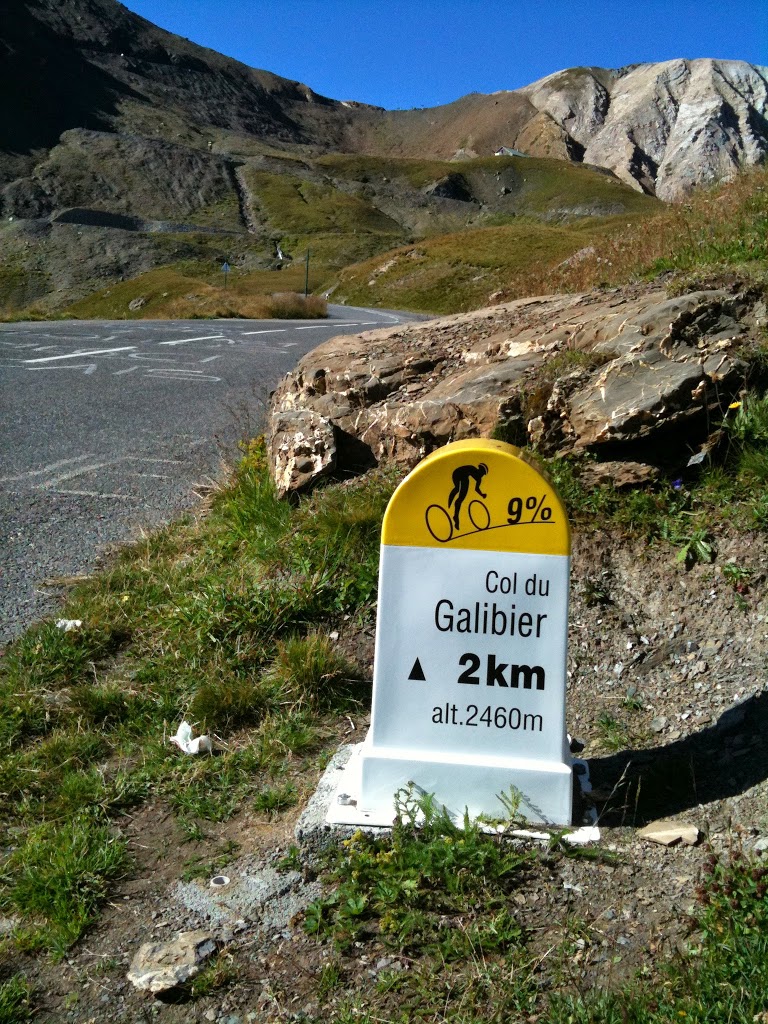
How many of you are training by doing the same thing over and over again, but expecting a different result? It is easy to fall into the same routine with exercise and don't get me wrong, routine is a good thing. But, if you want to improve, I believe from time to time you will need to get out of your comfort zone and change up the routine a bit. A client of mine gave me the name "The Evil Genius" and I think it largely came from the fact that I challenge him to reach beyond what he thinks is possible.
Lets take a simple swimming set of 10 x 100 @ 1:30
There are 3 ways to modify this set to make it more challenging.
1. Intensity - Same number of repeats, same interval but increase speed.
2. Duration - Same speed, same interval but add more repeats 12 x 100 or 15 x 100
3. Rest - Same number of repeats, same speed but on shorter rest interval of 1:25
What you choose to modify should focus on what your limiters are. You can apply this to your cycling and running when planning workouts. In addition, the type of training route you choose (flat, rolling, hilly) can help get you out of your comfort zone.
How often should you get out of your comfort zone? Once a week for beginners would be a good place to start. A more seasoned athlete may choose twice a week. Keep in mind there is not only a physical toll on these workouts, but a mental one. Often times the real gains come from the latter as the physical ability was always there, but the mind was lagging a bit in confidence or preconceived self imposed limits.
Get comfortable being uncomfortable and watch your fitness and performance improve.
Train smart, race fast!
Coach Eric
Triathlon 101 – The Basics Starting off… Keep it Simple
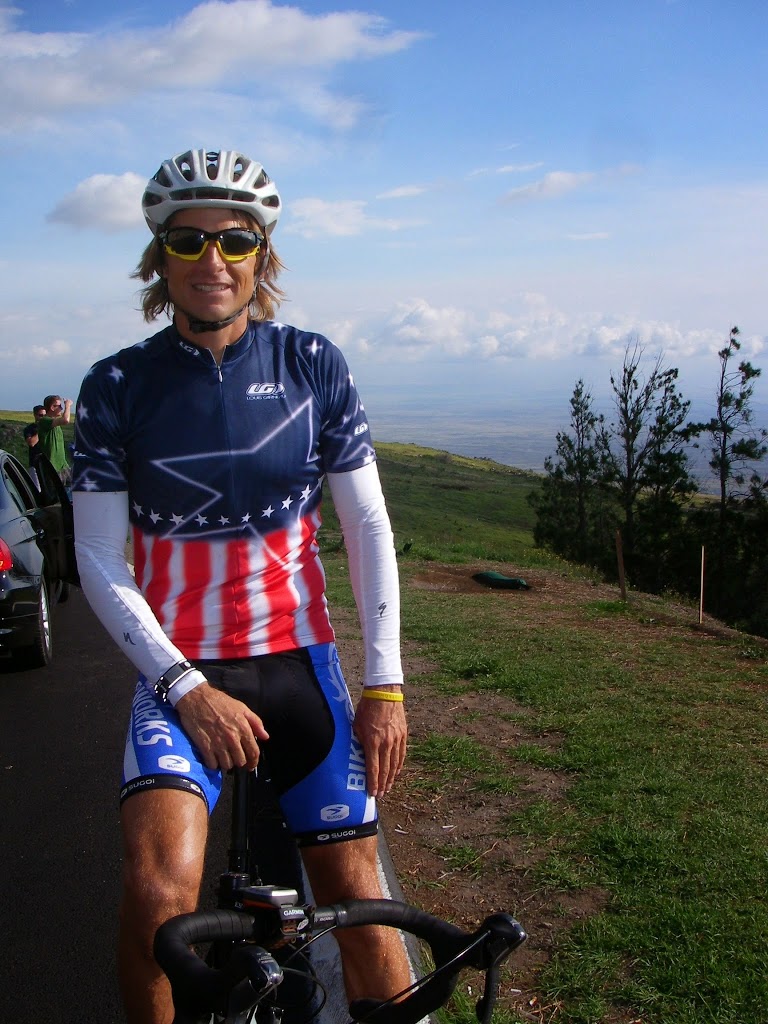
So you want to do a Triathlon but not sure how to go about training for it. Triathlon is comprised of three sports, swimming, biking and running and the events are typically completed in that order. A very common race distance that athletes will start with is called a sprint triathlon. The swim will usually be between 500-750 yards, the bike about 12 miles and the run 3.1miles.
The Swim – 10-20% of your race depending on ability. Of the three sports, the swim can be the most intimidating for people, especially when you are learning as an adult. One of the best things you can do in addition to getting to the pool and practicing is hire a coach to help you with your swimming stroke. A good set of eyes should quickly be able to determine where improvements can be made in technique to help you, swim faster and hopefully with less effort.
The Bike – 40-50% of your race depending on ability. The bike typically is the largest portion of the race in terms of distance and time. For many first time triathlete’s, I would encourage you to just ride whatever type of bike is available to you. No need to go out and spend $100’s if not $1,000’s of dollars on a bike before you know that you are going to be doing this sport for a while. A basic mountain or road bike should do the job. Plenty of gears to choose from and it may be a more comfortable ride compared to a time trial bike. They do have clip pedals now where you can clip your shoe right onto the pedal, but your running shoes and a pair of stomp pedals will work just fine and help keep the initial cost of your first race down.
The Run - 30-40% of your race depending on ability. Now most of us at one time or another either growing up or as adults have run at some point. While running may not be your favorite of the three events, it is the one event you can pretty much train for anywhere and all you need is a good pair of shoes. Take the time to get a proper fit for a pair of shoes that are the best for your feet.
Before you lay out a training plan to prepare for you first triathlon, it is important to identify which sports you’re strong in and which ones need a bit more attention. That way during the training, you can properly balance training for the three sports, work on improving your weaker ones and maintaining your strengths.
Setting up a training week does require a bit of thought but here are 5 simple to make that a bit easier.
1. Identify the best days and times of day for you to train.
2. When appropriate, find a workout buddy, as you are more likely to stick with a scheduled workout if meeting a friend.
3. Be flexible. Life does throw changes at us all the time, so having the ability to move things around when needed is a bit help.
4. Schedule a day off each week, where all you may do is take a leisurely walk for 20-30 minute if you feel antsy.
5. Brick workouts are very specific training. They may be challenging at first, but will help better prepare you for transitioning from one sport to another.
Training like a triathlete is a great way to stay fit even if you don't plan on racing. The variety of training generally helps athletes avoid overuse injuries from just doing a single sport and there are endless ways to structure workouts depending on your strengths and weaknesses. Lastly, as I have stated before, have fun with your training whether you train alone or with a group.
Train Smart, Race Fast....
Coach Eric
Little things go a long way
Spring is in full bloom throughout most of the county and more and more people will be ramping up their training for upcoming races. Along with the increase in training, comes the potential for over use injuries if the athlete is not mindful of their bodies signals. Here are 3 parts to pretty much any workout that if done properly will give you the best chance of success.
Warm up - Make sure you take time to let your body come online for the workout. A combination of aerobic activity gradually building intensity along with some sport specific, dynamic exercises is a great way to prepare the body for the session.
During workout - This is where you really need to pay attention. Some days you are going to feel great, so take advantage of that. Other days you are just not going to have it. Kind of like Captain Kirk's request for more power and Scotty says "captain I'm given her all she's got". These days are best spent working on technique and basic endurance skills. So, when the body is feeling good, you have the good biomechanics in place to when you crank things up.
Cool down - As the training session comes to a close, take the time to GRADUALLY cool down. Some post exercise flexibility in areas of tension would be most beneficial along with some myofacial release work with "The Stick", foam roller, or any combination of tools that will help you loosen up
Two orher big things you can do when not training would be adequate sleep & balanced nutrition. Lets keep this real simple: We are all different on our own individual sleep needs so find what is best for you and get to bed. The same goes for the foods you give your body. Find what works for you and not the latest fad or what a professional athlete may be eating who is training 20+ hours a week.
Exercising and training for a race is a privaledge and such a great way to spend some free time. So, make sure you take the time to do the little things so your training and racing can be at their best.
Train Smart, Race Fast!
Coach Eric
Group Training & Racing = Fast and Fun
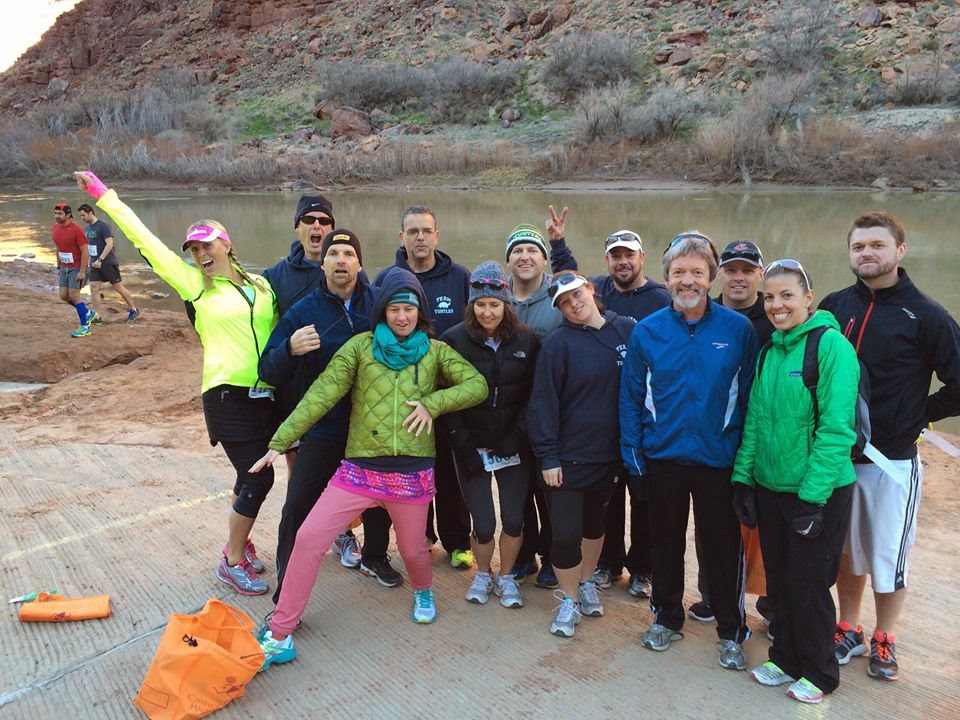 |
| Canyonlands 1/2 Marathon Crew pre-race. Moab, UT |
Training and racing with a group from time to time is is a great way to mix things up. Last weekend, a group I coach and run with headed for Moab, UT for the Moab 1/2 Marathon. The trip reminded me once again how much fun can be had when you get a group of people together for some exercise.
 |
| Post race hike Arches National Park Moab, UT |
Incase you have never had the opportunity to workout with a group, here are a just a few benefits of group training:
- Training partners
- Someone to push you and go into the hurt locker with
- Someone to just cruise when you need it
- Socializing during workout
- Coaching
- Someone to draft in the pool, lake or ocean
- Accountability knowing you are meeting a friend for a workout
- Potential cool photo opportunities
- Someone to draft on the bike when you're dragging ass or rotate through on a paceline
- Post work social activities... need I say more
- Carpooling to workout and/or race which leads too...'
- Roadtrips!
- Therapy... usually cheaper than retail therapy
- Laughter, think about it, when is the last group workout you did and there was no laughing?
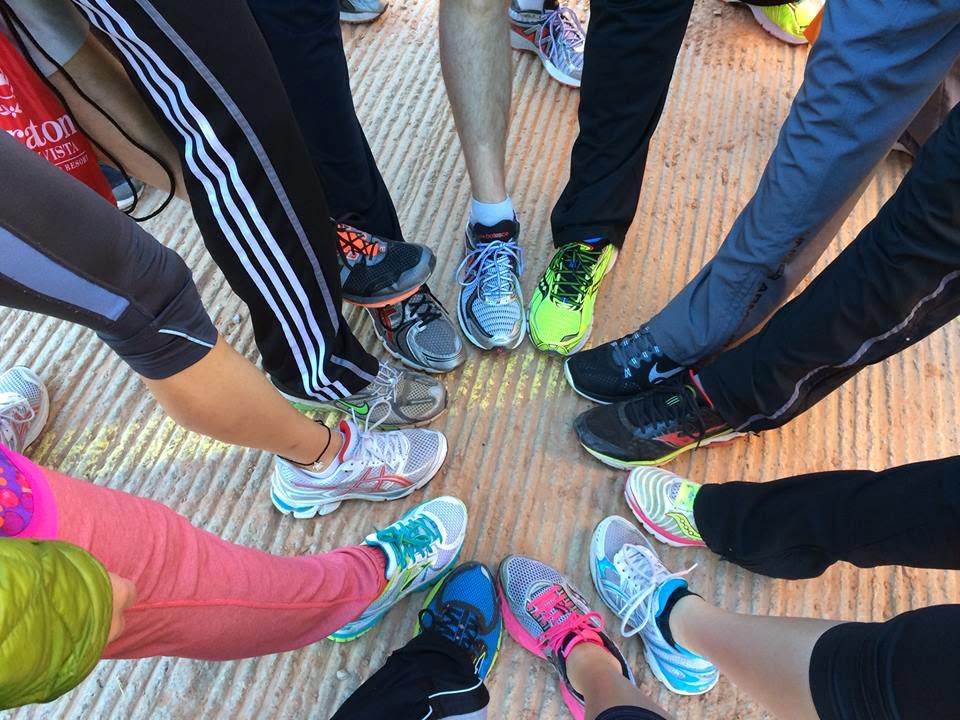
As you plan out your training in the coming days and weeks, think about ways that you may be able to add a group workout into your schedule.
Lace um up and have a great week,
Coach Eric
Northern Colorado Triathlon Club (NoCo Tri) has launched!!!

There are many small groups of endurance athletes working out in Northern Colorado, and even more people working out by themselves. What if these groups could be brought together for training, racing, educational and social activities?
Two local coaches, Jon Mason & Eric Neilsen had a vision of a triathlon club that would unify the endurance athletes of Northern Colorado. They also wanted to make a difference in the community they live in. After some further discussion it was decided to move forward and start taking the necessary steps to forming the club. Knowing they would need the support of other like-minded individuals in the community, a meeting was held in mid-December to see who might want to be involved in the leadership as the club was being formed. Fifteen people showed up for the first meeting and from that group they filled roughly 2/3 of the officer and committee chair positions that would lead the club in 2014.
Next up was planning for the first meeting and filling the remaining leadership positions. Jon and Eric along with the club officers Brent Phinney, Michelle Alexander, Jennifer Schneider and Diane Schultz worked on the agenda and logistics for the kick-off party to be held on January 15th. They had a great turnout for the event with 85-90 people showing up. The evening consisted of socializing, seeing old friends, and meeting new friends along with hearing about the nuts and bolts of why the club was being formed. The turnout of people for the first meeting exceeded expectations and is a good sign that the people of Northern Colorado are interested in making this happen.
People join clubs for many reasons: social, training groups, education, racing. We envision the NoCo Tri Club serving all these needs and more as interest continues to build in 2014.
For more info on the Northern Colorado Triathlon Club please visit www.nocotri.comor check out the Facebook page www.facebook.com/nocotri
Make it a great week of training where ever you're at and take a few minutes to check out your local triathlon club.