Isometric work for swimmers

Swimmers have recently asked about body weight movements, particularly isometric work (static muscle contraction). No equipment is required. Here are some of the benefits for swimmers:  

  • Core and Postural Stability: Holding positions like planks or hollow-body holds builds deep abdominal endurance needed to maintain a tight, hydrodynamic body line in the water, which helps reduce drag (enemy #1 in the pool). This increased torso stiffness will improve force transfer between the upper and lower body.
  • Enhanced Catch and Propulsion: Swimming relies heavily on holding a high-elbow position during the catch phase. Isometric training at specific joint angles strengthens the exact positions where a swimmer catches and pulls against the water, maximizing propulsive force.
  • Enhanced Neural Drive*: Maximal short holds increase motor unit recruitment and neural efficiency, allowing athletes to produce higher force outputs quickly. *Neural drive is the electrical signal that travels from your brain and spinal cord to your muscles to tell them to contract and produce force.
  • Joint and Tendon Support: Static holds strengthen tendons and ligaments around the shoulder joints, lowering the risk of overuse injuries. High-repetition shoulder rotations and pull-heavy training put swimmers at risk for tendinopathy. 
  • Improved Muscular Endurance: Isometrics train muscle fibers to sustain prolonged tension, helping swimmers maintain stroke power and efficiency late in a race when fatigue sets in.
  • Low Joint Stress and Quick Recovery: Because isometric movements involve no joint movement, they allow swimmers to build high levels of neural drive and muscle activation without adding heavy wear or excessive soreness.

However, there are some differences for sprinters vs distance swimmers. While there is an extensive list of exercises to choose from, I picked (1) in each category.  However, modify based on your current level of fitness and any specific physical limitations you may have.

Sprinters need explosive power so the focus is on high-intensity, short-duration holds rather than long, exhausting holds. Aim for 3-4 sets of each.

  • Core Rigidity (Reducing Drag): Hollow Body Hold: Lie on your back, press your lower back into the floor, and lift your legs and shoulder blades slightly off the ground with arms extended overhead. Hold for 20-30 seconds. This mimics the exact streamline position under maximum fatigue.
  • Catch & Pull Power (Upper Body Propulsion): Straight-Arm Band Hold: Secure a resistance band in front of you. Pull your arms back to your hips (the finish of the stroke) and hold the band statically against high tension for 15-20 seconds to build triceps and lat endurance.
  • Start & Turn Power (Explosive Push-Offs): Isometric Wall Squat: Lean your back against a wall and lower into a squat until your knees are at a 90-degree angle (mimicking a turn) or a 120-degree angle (mimicking a dive block start). Press your feet hard into the floor and hold for 15-20 seconds of maximum effort.

Distance Swimmers will shift away from maximum explosive power to focus on high-endurance stability, fatigue resistance, and maintaining a good, hydro-dynamic body line. The distance swimmer will benefit from longer-duration, moderate-intensity holds to train slow-twitch muscle fibers and tendon resilience.  Aim for 2-3 sets of each.

  • Postural Endurance (Maintaining Streamline Under Fatigue): Superman/Prone Arch Hold: Lie face down on the floor, extend your arms straight overhead, and lift your chest, arms, and legs slightly off the ground. Hold for 45-60 seconds. This builds endurance in the lower back, glutes, and rear shoulders, preventing your hips from dropping in the water late in a race.
  • Shoulder Health & Rotator Cuff Resilience (Overuse Prevention): Wall Face-Away Shoulder Extension: Stand facing away from a wall, about a foot out. Extend your arms straight back and press the back of your hands flat into the wall. Push firmly against the wall for 30-45 seconds. This strengthens the posterior deltoids and triceps, balancing out the chest-heavy pull of distance swimming.
  • Sustained Kick & Catch Stability (Rhythmic Efficiency): Low Hover Plank: Hold a standard forearm plank, but shift your weight slightly forward so your nose is past your hands. Hold for 45-60 seconds. Additionally, this builds the deep transverse abdominis endurance to link your upper-body pull with a 2-beat, 4-beat, or 6-beat kick.
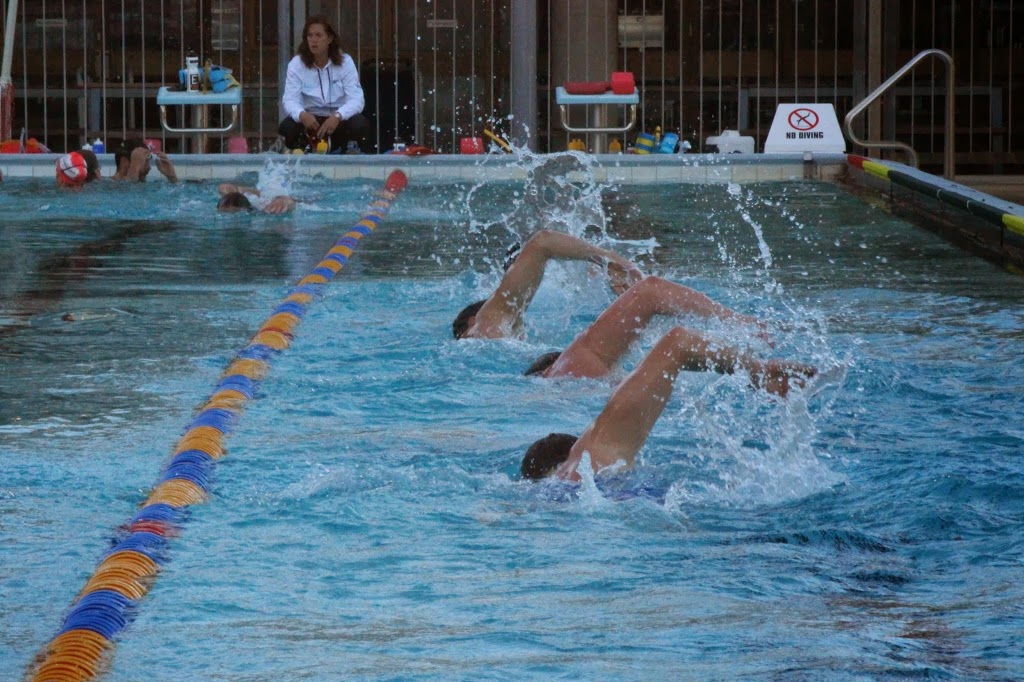
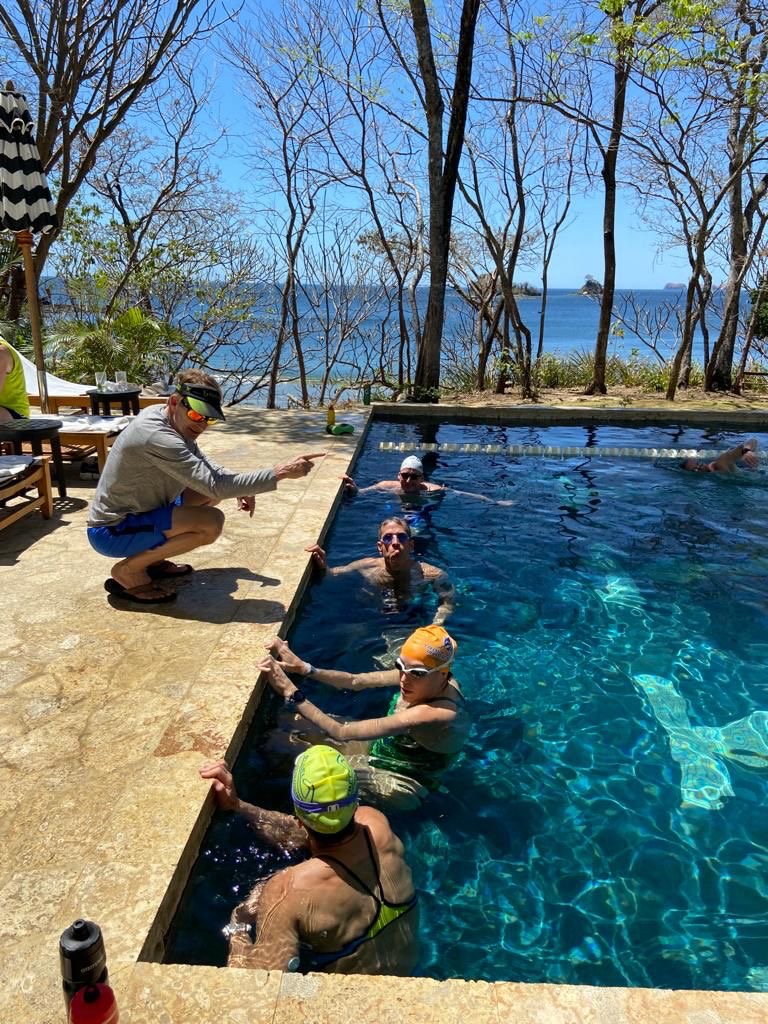
 

Triathletes – Fine tune your Freestyle with Kick Right Left Swim – KRLS

There are so many freestyle drills to choose from to help triathletes improve their efficiency.  One of my all-time favorite “go-to” drills is 100’s broken out by 25’s: Kick, Right Arm, Left Arm, Swim (KRLS).  This simple, effective sequence is a powerful diagnostic tool for both swimmer and coach to identify strengths and weaknesses in the freestyle stroke. Here’s a detailed look at proper KRLS technique to maximize stroke efficiency and, with mindful practice, improve swimmer performance:

  1. KICK: Get the legs going and blood pumping as larger muscles are engaged. This can be done starting with both arms overhead in position 11 (1 and 11 o’clock), then one arm overhead with the other at the side, allowing a gentle body roll. Each phase has its advantages based on the areas of weakness that the athlete needs to address–however, we often see land-based endurance athletes sink like a stone! Strong cycling and running legs do not always transfer to efficient freestyle kicking. The kick for a triathlete needs to be supple and supportive to maintain a good body line while conserving energy. An added benefit to a smooth 2 or 6 beat kick pattern is helping the athlete maintain a sustainable stroke rhythm for longer distances.
  2. RIGHT & LEFT ARM PULLS: Focusing on independent arm movements helps the athlete identify poor stroke biomechanics and strength imbalances. The legs continue to play a supportive role as the arms are added. It’s best to perform single arm drills with the non-pulling arm above the head and slightly rotated body position. Make smooth, repetitive strokes while keeping the same arm outstretched for a full 25, then switch sides. Focus on execution, not speed. Athletes may find it helpful to complete 2-3 strokes before each breath as breathing can throw off rhythm and balance. Others, particularly those who are either new to swimming or have a breathing challenge may benefit by breathing every time they pull–this provides more oxygen for newbies and helps those with non-dominant side breathing weaknesses successfully complete the drill. 
  3. SWIM:  Ahh… the last 25 and now it's time to put all of the pieces together. Push off the wall and complete 2-3 stroke cycles to feel the water.  Then, if that’s feeling good, build intensity and hold form/rhythm for the remainder of the 25. Another way to approach the last 25 is to break down the underwater portion of the stroke into 3 phases.  This allows you to focus on feeling the water at each phase and make adjustments to the stroke.
  • Catch - first ⅓ of the stroke
  • Pull/Power - second ⅔ of the stroke
  • Finish/Release - last ⅓ of the stroke 

The KRLS drill is typically incorporated into the warm up but also works well as part of the main set when swimmers need to refocus on form or when they need a bit of easy swimming to reset their energy before the next set. Drills are recommended at every practice to reinforce proper stroke mechanics, refine technique, increase efficiency, help prevent injury and improve performance. What are some of your favorites? 

Set Your Pool Up for Success!

Recently I was on a podcast with Chris Webb at Gain Swim talking about a number of things related to masters swimming and how to help club coaches better understand the masters athlete and the different ways a masters program can help their team.  Todays blog post was inspired by the podcast and 

There’s an old saying, those that fail to plan, plan to fail. If you want to build your program and more importantly keep your swimmers coming back, you need to set up the pool for a successful practice. This, combined with lane flow management, will lead to great workouts!  Here are three things you can do to help keep your practices safe, fun and challenging: 

  1. Writing the Workout - First, identify the type of session: Free, IM, Sprint, Mid-Distance, etc. Next, provide a general warmup of ~ 10 minutes and on sprint days even more. Masters have many different warm up needs (with some talking more than swimming!) so let them do what works best for them during the general warm up.  Next it’s time to get to work with a Pre-Set to help transition heart rate and/or work on a particular skill. Finally, write 1-2 main sets and enough time for a proper cool down.
  2. How to Explain: WHITE BOARD- write legible, write BIG and use black, blue or other contrasting colors that show up best for aging eyes. PRINTED - another option is to print the workout in a BIGGER FONT so that each lane can have it for easy reference.  This helps those that cannot see the white board and swimmers whose learning style works best this way.  VERBAL - talk to the whole group at the beginning of practice followed by individual lanes and then specific individuals as needed–plan to incorporate all three. Highlight intervals, number of reps and lane order suggestions. Key point: make sure the lane leader knows what to do and give short cues to help with technique or questions about the set (ex. descending, building, fast walls, maximize streamlines, work underwaters, etc.).
  3. How to Execute: VISUAL DEMOS - Often very helpful to have an experienced swimmer in the workout demonstrate technique or a specific drill. VIDEO - Seeing the correct way to do something via team email or social media provides ongoing feedback and reinforcement. Also, providing exclusive video of themselves when possible adds value and helps them understand adjustments for success.  Visual Demos are a great opportunity for peer coaching during practice and building team camaraderie while learning together. Lastly, MANAGE THE FLOW - This is what separates good coaches from great coaches and deserves a separate blog!  A great coach will monitor flow and make micro adjustments continuously–swimmer order, intervals, repeats, set objectives, etc. to fine tune the session, demonstrate active participation and maximize the swimmer experience. A fully present, engaged, high energy coach shows commitment to the team and sets the tone for a positive team culture.

By setting the pool up for success, your practices will run smoothly and swimmers will feel a sense of belonging to a community that keeps them coming back for more. What are you doing to set your team up for success and manage the flow in order to give your swimmers the best possible experience?

Geoff Robinson

Nine years ago I was a body builder who was getting bored and injured. A chance encounter on
a beach prompted a pivot to triathlon. But first, I had to learn to swim. Coach Eric was
recommended to me by some local Masters Swimmers as a potential swim coach. Little did I
know, he’s that and so much more, after a single swim lesson I hired him as my multisport
coach. As barely a survival swimmer, Eric’s lessons, coaching, and encouragement got me to be
a middle distance triathlon capable swimmer.
All the while he was helping me to improve my bike and develop a run. In10 months he got me
70.3 ready.

Eric has continued to be my coach to this day, working around a full time job with on-call
responsibilities, a pandemic, a couple of injuries, and everything life throws at you.
Eric has this way of working with athletes that allows him to meet you where your are, and
where you’re coming from. He can adapt his very language to construct coaching prompts that
make sense in your terms and can apply to how you move and even think about your body and
it’s position in space. I am, self admittedly, proprioceptively challenged, Eric and I developed a
shorthand which not only allowed me to execute efficiently, but also to improve on my
proprioception.

As I approached my 60’th year I’d set an outlandish, to me, goal of qualifying for the Ironman
70.3 World Championship. Coach Eric was fully onboard and after a winter of intense training
swim, bike, run, and strength, I qualified in March 2025. In April I crashed my mountain bike and
fractured the lateral condyle of my left femur, that’s the outside knobby bit at the knee . So much
for running, or hiking, walking, standing, and even delivering any power on the bike.
Coach Eric teamed up with Physical Therapist Craig Depperschmidt to build a recovery plan that
would not just get me to Worlds, but would prevent further degradation and destruction of my
knee. The two of them worked hand in glove through my recovery and the additional challenge
of a rib injury along the way. Eric structured my workouts around Craig’s PT prescriptions and
they had me stronger and fitter than ever in time for Worlds in Marbella SP.
The course is exceedingly vertical so Coach Eric balanced the long and steep days in the
saddle with what my knee would tolerate and, together with Craig, developed a run strategy that
would be sustainable.

Endurance sport is at least as mental as it is physical, Eric is a master at keeping you focused
on the process and the progression and great at combatting the doubts, fears, and anxiety that
come along with training, racing, and recovery.
Just getting to the IM 70.3 WC was a win in my book. Crushing the bike and logging a PR half
marathon in the Main Event were the nuts and cherry, respectively, on my triathlon Sunday
sundae.

I never hesitate to recommend Coach Eric to anybody who expresses an interest in any of the
endurance disciplines, or even to people who express “I’ve been wanting to get back to (sport x) but can’t work out how.”
I always say, “You want to get faster? I know a guy who can train you smart.”

Ironman swimming in the pool

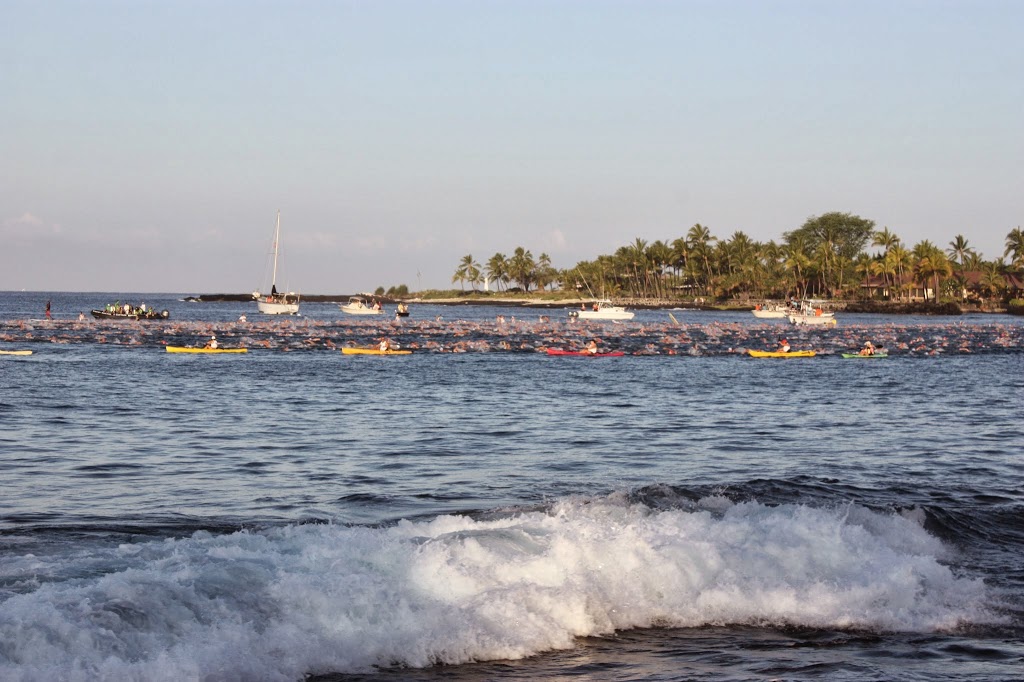
Swim Start Ironman World Championship view from Kona Inn on Ali'i Drive


If you are preparing for an early season Ironman, this is a great 4000yard/meter workout you can insert into your training plan.  Also, good for swimmers preparing for open water swims and/or the time crunched athlete. Ironman swimming requires the ability to build into swims making early pacing critical to maximizing your performance.

The workout
1 x 600 Free Warm
3 x 400 Faster pace per 100 than 500 this should be easy since 500 was warm up
4 x 300 Faster pace per 100 than 400's
5 x 200 Faster pace per 100 than 300's
2 x 100 Cool down
Total 4000

Intervals
600 on 1:00 rest
400's 300's and 200's on your normal base example 1:30/100M
so 400's on 6:00, 300's on 4:30, 200's on 3:00
100's on :10 sec rest mix strokes as you like

You could repeat this set every 3-4 weeks to measure your improvement as the season progresses and it works well before a bike session as the first part of a swim/bike brick.  You could incorporate the use of paddles and/or swim buoy depending on level of swim experience.  Generally speaking, ironman swimming requires good upper body endurance and mixing various forms of pulling into your training can be very helpful.

Please email me at coacheric8@gmail.com with topics you are interested in learning more about.

Coach Eric

Stay Focussed and train the mind!

The first month of 2024 has zoomed on by and February is already here.  Hopefully any new years resolutions you set in motion have had some staying power and you are starting to see some benefits to a process focused commitment to achieving your goals.

At times, mantras and quotes are helpful to reset, refocus and recommit to the process.  Below are some from various authors that helped me navigate the ups and downs of 2023.   2024 is a leap year! so we get 1 extra day to keep nailing the basics, details, little things, etc... I hope 1 or 2 of these resonate with you and be just what you needed at this moment in time.

Heading into my 34th year of coaching, my plan is simple: continue being a life long student of sport, questioning and challenging how we train...so I can help YOU Train Smart and Race Fast!  I truly appreciate all my mentors, coaches and athletes I have worked with over the years.

Please reach out if you would like to schedule a FREE 20 minute consultation.

"Your attitude determines your altitude.  The better the attitude, the higher you will soar in all things you choose to pursue with a passion" - Coach Eric Neilsen

Masters Swimming – The workout and lane flow!


United States Masters Swimming (USMS) got started in May of 1970.  Read more HERE on the history of USMS.  I started my masters swimming career in the mid 80's and started coaching in 1991.  Over the past 35 years I have been fortunate to have some great mentors and have learned many things from the athletes I coach.  Writing a good workout takes a bit of planning by the coach and combined with managing the lane flow leads to a great workout for the swimmers.  Here are some thoughts I have on doing just that.

  • How to write the workout
    • Identify the goal of session
      • Free - Sprint, Mid, Distance, Tri/Open water 
      • Stroke/IM
      • Technique
      • Combo 
      • Repeat distances 25’s, 50’s, etc...
      • Aerobic, Anaerobic, both
      • What the pool dictates 
    • Warm up
      • With a 60 minute session, I give them 10 minutes of easy swim, kick, drill on their own.  Masters bodies have many different warm up needs.  Some swim, some talk on the deck but whatever works for them in those 10 minutes.  Speed days I like to give them 15 minutes of general warm up.  Some dryland exercises are also good prior to getting into the pool.
    • Transition set
      • Can really be anything that helps them transition the heart rate up and a technique focus component as well.
    • Main set 1 or 2
      • Depending on the workout goals 1 or 2 main sets is more than enough
    • Cool down
      • I always encourage it but generally leave that to the individual
  • How to explain
    • Written
      • White board - Write legible, write BIG, Use black or blue pen that shows up best for those aging eyes
      • Printed for each lane - Print a copy of the workout that each lane can have.  Helps for those that can not see the white board and those that process by reading what they are doing
      • Pre workout email
      • Find what works best and it might be a combination of all
    • Verbal
      • Group - Talking to the whole group at the beginning of practice to go over goals for the day.  Need a big voice for this!
      • Individual lane - Giving each lane their instructions.  Usually intervals to swim on, number or reps and lane order suggestions.  Make sure FOB knows what to do. More on this later.
      • Individual - Individual instruction, short cues to help swimmers with technique or questions about the set.
    • Visual Demonstration
      • Swimmer - Often very helpful for experienced swimmers in the workout to demonstrate technique or a specific drill.
      • Video - Having swimmers see the correct way to do something is very helpful.  Also, having them see themselves swim so they can make the needed adjustments.
  • How to execute
    • Lane Dynamics
      • Set the lane up for success… managing the flow.  This is one of the things IMO that separates good coaches from great coaches.  A great coach will monitor this and make micro adjustments to swimmers, rest intervals and set objectives to fine tune the session.  I sometimes like to describe lane positions much like riding a bus: Front Of the Bus (FOB), Middle Of the Bus (MOB), Back Of the Bus (BOB).
      • Front Of the Bus (FOB) - This is your lane leader and critical for the lane functioning and flowing well.  Must be reasonably good with the clock, pacing and counting laps.  When giving instructions to the lane/group, make sure FOB is onboard.  If FOB is not good then MOB and BOB have the potential to go astray and lane chaos quite possible.  One thing that helps the whole lane is a set of 25’s or 50’s where everyone in the lane gets to be a FOB, MOB and BOB.  This helps the swimmers appreciate all the work a FOB must do to keep the lane flowing and also gives confidence to the MOB and BOB that if put into a FOB position, they can lead the lane with confidence.
      • Middle Of the Bus (MOB) - The majority of the lane falls here with order TBD based on type of set and who is wearing what. Often swimmers that could lead but would rather follow due to pacing or clock skills. Lots of the MOB and BOB also like to draft as that is easier 2-4 seconds per 100.  Along those lines the MOB can really have some speed variances if you combine the draft + using gear; it is not uncommon for swimmers to have 7-10 second per 100 differences in sustainable speed.  
      • Back Of the Bus (BOB) - Usually the slowest swimmer in the lane, does not want to be in anybody’s way, has no desire to lead, just wants to follow/draft. Having an off day but wants to be a part of the lane.  BOB shares many of the characteristics of MOB but generally just a slower pace that can still function in the lane. Depending on pool dynamics, BOB could be asked to move down a lane and lead if the current lane has too many bodies.  Same goes for a FOB that could be moved up a lane and be a BOB or MOB
      • What are you wearing?  
        • Paddles, Fins, Snorkel, Buoy - Can change flow of lane and swimmer speed 7-10 seconds per 100 and interval capacity 5-10 seconds per 100.  As noted above this has big impacts in the MOB.

There are endless combinations of swimming sets to create workouts.  Combining that with good lane management will help give the swimmers you coach the best possible experience.  

Have fun with it all, Coach Eric

Cruisin’ into 2022

As we ease into 2022 I thought I would repost some quotes from an earlier blog in 2016.  Everyday is a gift!

I find myself reading more and seeking out quite time to just think... or not.  A good friend of mine had forwarded along some quotes he liked and I thought, why keep those to myself.

Below are some that have been around and others you may find new to you along with an original from yours truly.  I hope 1 or 2 of these resonate with you and be just what you needed at this moment in time.

"We all need empty hours in our lives or we will have no time to create our dream" - Robert Coles

"The food you eat can be either the safest and most powerful form of medicine or the slowest form of poison." - Ann Wigmore

"Your attitude determines your altitude.  The better the attitude, the higher you will soar in all things you choose to pursue with a passion" - Coach Eric Neilsen

"Simplicity and harmony are the ultimate conditions to be attained in all things". - Horace Fletcher

photo-25

"Draw a circle around yourself - invite people in or keep them out. We are the creators of our social geometry.  Calculate your volume". - Rachel Wolchin

"Don't limit your challenges, challenge your limits". - unknown

"A creative man is motivated by the desire to achieve, not by the desire to beat others". - Ayn Rand

"The will to win, the desire to succeed, the urge to reach your full potential... these are the keys that will unlock the door to personal excellence". - Confucius

220px-Aristotle_Altemps_Inv8575
"Believe those who are seeking the truth; doubt those who find it". ~André Gide
"The obscure we see eventually. The completely obvious, it seems, takes longer". ~Edward R. Murrow
"Just as the old, looking back, idealize the past, so the young, looking forward, idealize the future. Illusion is the stuff of memory — and is at the heart of hope". ~Dr. Idel Dreimer

"Life is 10% what happens to you and 90% how you react to it". - Charles R. Swindoll

Articles, blogs, books and videos

Winter time is certainly a time to let our body and mind recharge a bit.  Slowing down is a good thing and often times this leads to an increase in reading more.  Here are some links to blogs, instructional videos, articles, books, etc... that you may find helpful as you continue to build your knowledge base.  Some may just be reminders, others new information that may trigger further exploration. Enjoy : )
Books:
Peak Performance, The Well Built Triathlete, Think Again, The Passion Paradox, Essentialism, The Culture Code, The Circadian Code, A Reenchanted World, Enlightenment Now, How Bad Do You Want It
Videos and Blogs:

How competitive swimmers can maximize their time in the pool

Running Biomechanics with Bobby McGee (video)