
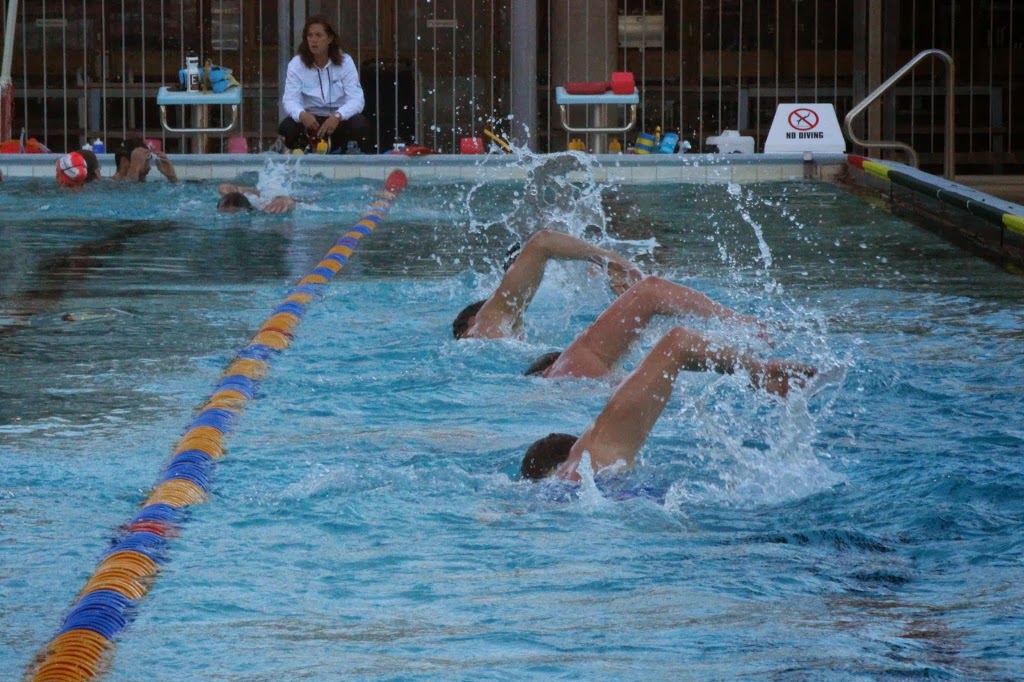
Triathletes – Fine tune your Freestyle with Kick Right Left Swim – KRLS

There are so many freestyle drills to choose from to help triathletes improve their efficiency.  One of my all-time favorite “go-to” drills is 100’s broken out by 25’s: Kick, Right Arm, Left Arm, Swim (KRLS).  This simple, effective sequence is a powerful diagnostic tool for both swimmer and coach to identify strengths and weaknesses in the freestyle stroke. Here’s a detailed look at proper KRLS technique to maximize stroke efficiency and, with mindful practice, improve swimmer performance:

  1. KICK: Get the legs going and blood pumping as larger muscles are engaged. This can be done starting with both arms overhead in position 11 (1 and 11 o’clock), then one arm overhead with the other at the side, allowing a gentle body roll. Each phase has its advantages based on the areas of weakness that the athlete needs to address–however, we often see land-based endurance athletes sink like a stone! Strong cycling and running legs do not always transfer to efficient freestyle kicking. The kick for a triathlete needs to be supple and supportive to maintain a good body line while conserving energy. An added benefit to a smooth 2 or 6 beat kick pattern is helping the athlete maintain a sustainable stroke rhythm for longer distances.
  2. RIGHT & LEFT ARM PULLS: Focusing on independent arm movements helps the athlete identify poor stroke biomechanics and strength imbalances. The legs continue to play a supportive role as the arms are added. It’s best to perform single arm drills with the non-pulling arm above the head and slightly rotated body position. Make smooth, repetitive strokes while keeping the same arm outstretched for a full 25, then switch sides. Focus on execution, not speed. Athletes may find it helpful to complete 2-3 strokes before each breath as breathing can throw off rhythm and balance. Others, particularly those who are either new to swimming or have a breathing challenge may benefit by breathing every time they pull–this provides more oxygen for newbies and helps those with non-dominant side breathing weaknesses successfully complete the drill. 
  3. SWIM:  Ahh… the last 25 and now it's time to put all of the pieces together. Push off the wall and complete 2-3 stroke cycles to feel the water.  Then, if that’s feeling good, build intensity and hold form/rhythm for the remainder of the 25. Another way to approach the last 25 is to break down the underwater portion of the stroke into 3 phases.  This allows you to focus on feeling the water at each phase and make adjustments to the stroke.
  • Catch - first ⅓ of the stroke
  • Pull/Power - second ⅔ of the stroke
  • Finish/Release - last ⅓ of the stroke 

The KRLS drill is typically incorporated into the warm up but also works well as part of the main set when swimmers need to refocus on form or when they need a bit of easy swimming to reset their energy before the next set. Drills are recommended at every practice to reinforce proper stroke mechanics, refine technique, increase efficiency, help prevent injury and improve performance. What are some of your favorites? 

Improve your swimming technique… Train with a center mount snorkel.

 Center Mount Snorkel

Recently I returned to using a center mount snorkel for part of my swim sessions in the pool.  I forgot how much fun this is when air is always available & also realized that my stroke needs some tuning up.   Typically I will start with it during warm up swimming 2-300 yards at an easy pace.  Then, gradually building the distance on some shorter sets as I get used to flip turns again while not swallowing water coming back to the surface.  I have also been incorporating into my cool downs to help me refocus on my technique before ending the training session.  Here are some of the things I like about training with the center mount snorkel.

Swimming: First and foremost, it allows the athlete to focus on technique without having to turn the head to breathe.  Often times, breathing strokes will cause a swimmer to become unbalanced in the water causing them to wiggle from side to side or worse yet, compromise body position with sinking hips, legs and feet.  With the snorkel the swimmer is able to keep their head in a neutral position, working on good body alignment and balance in the stroke.  Athletes with breath timing issues can learn to time their breathing without turning the head.  A great drill for this is 4 x 25  rest :10 seconds with snorkel timing your exhale to the pulling arm you wish to breathe on.  Then swim 1 x  50 without the snorkel breathing to pulling arm side you just practiced.  Repeat 2-3 more times.

Kicking: With the snorkel, like swimming allows the athlete to maintain good body alignment and can reduce stress put on the lower back if kicking too much with a kickboard.   Beginners can start with 4 x 25 flutter kicking rest :10-15 seconds.  Arms stretched out overhead at shoulder width holding onto the bottom of a kickboard to help stabilize.  Once this skill is acquired then try the 4 x 25 without the kickboard arms stretched out overhead at shoulder width or in a streamline position.

Drills: I like to do what I call a progression scull.  This is where the athlete starts in the front scull position, arms stretched out in front at shoulder width 14-18 inches below the surface of the water.  Start with some gentle sculling movements then gradually progress the scull through the freesytle pulling pattern until you reach the finish of your stroke.  Like above 4 x 25 on 10-15 seconds rest will do and then swim 1 x 50. If done correctly, you should really feel a good connection with your hands to the water.  Single arm swimming is also good with the snorkel as it allows the swimmer to coordinate hand/arm speed through the pull to their hip speed.  Doing single arm pull with the non-pulling arm stretched out in front is a good way to start.  I like this position as it allows the swimmer to feel a nice long body line from finger tips, through shoulder to hip.  Also, since you don't have to breathe, you can pay attention to that lead arm when pulling to make sure it is not crossing center, the elbow is dropping or exhibiting other deviant behavior.

If you have not used a center mount snorkel before, I highly recommend giving it a try.  Typical cost is between $30-$40.  Be patient as you get used to breathing with the snorkel.  Keep the repeats short so you can keep the technique focus at a premium.

Train Smart...Race Fast

Coach Eric