
We all were beginners in the sport of triathlon at one time. I have learned so much since I started racing in 1986 and grateful for all I have learned from my athletes, friends and training partners over the years.
Blog
Summer = Smoothies
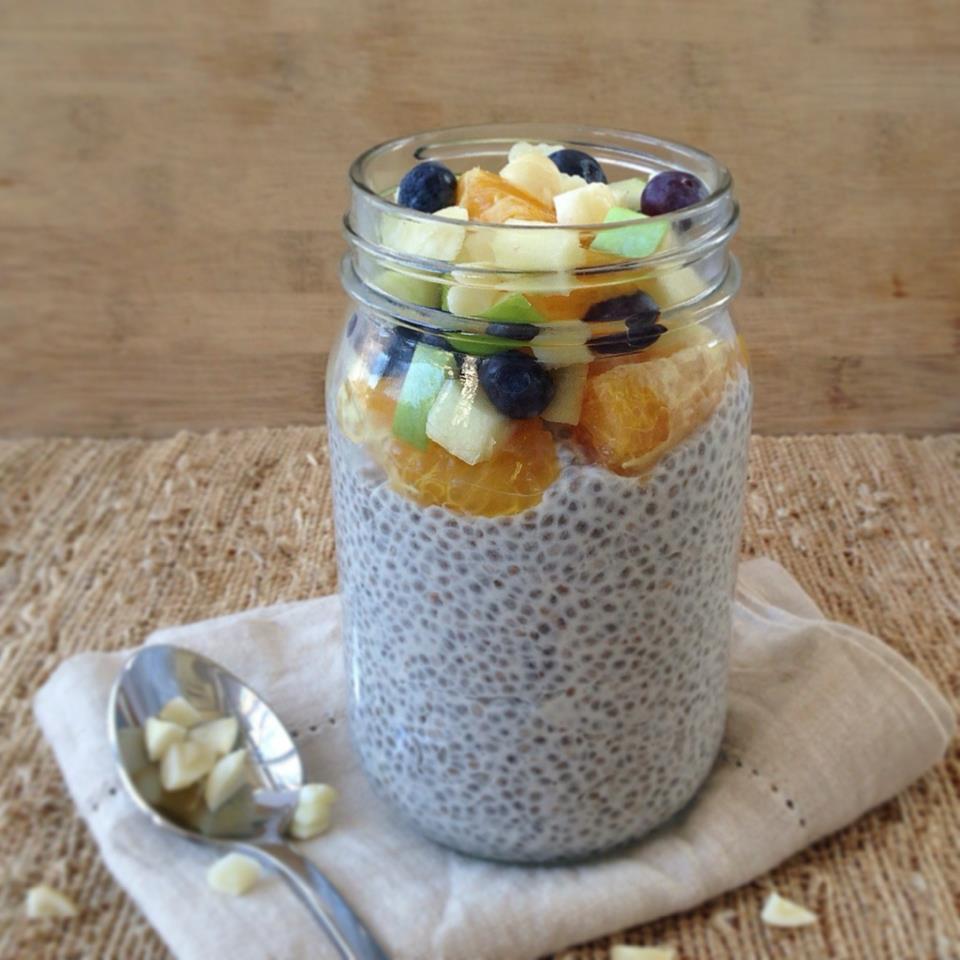
With the weather getting warmer, that can make fueling up after workouts a bit more challenging because you need more hydration along with calories. A simple way to accomplish that is to mix up some of your favorite ingredients in the blender, then just sip away. Not only does the post workout smoothie taste good, but if your workout was a hot one, a cold beverage really hits the spot. Just watch out for the brain freeze if you drink it too fast!
Here are some smoothie recipes to try after your next workout, for breakfast or lunch or in between meal snack. Ingredient portions to your taste buds liking and how thick or thin you like your smoothie
"Hawaiian Style"
"Banana Bliss"
"Taste bud frenzy"
1 cup coconut milk
2 Tbs. freshly squeezed orange juice
1 Tbs. maple syrup (or ¼ tsp. stevia)
½ tsp. vanilla extract
¼ tsp. ground cardamom
½ an orange, peeled, segmented, and sliced
½ of a green d’Anjou pear, sliced thin
a handful of blueberries
a handful of macadamia nuts, chopped
2 ounces espresso (or very strong coffee)8 ounces low-fat Greek yogurt2 tablespoons sweetened ground chocolate1 banana
Faster swimming
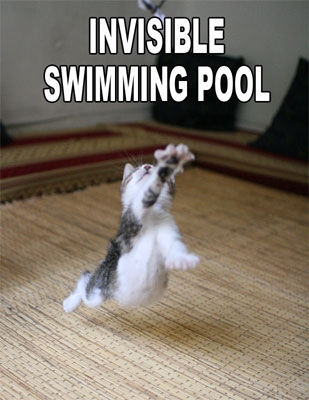
I could not come up with a good picture for this article, so I decided to go with something that might make you laugh or smile. Someone new to swimming might feel like a fish out of water or like this cat.... get me out of here!!!! But learning to swim and get faster is really not that bad.
Most people who compete in triathlons or swimming events want to get faster. Masters practice and private lessons have gotten you so far, but you still are questing for more speed. Someone asked me the other day if there was one thing they could work on in the water, what would it be. I replied, "avoid the single speed arm pull and try to accelerate your hand/arm along with hips as you move through the water" Sounds simple right? Well, it can be if you just put a little practice time in. Try initiating the hip opposite the pulling arm. What this means is if you are pulling with your right, a fraction of second before you start the pull, try rotating (pushing) your left hip down since you will be stretched out on your right side. This may help you to fully engage and take advantage of your core muscles more, thus delivering more power/speed to your stroke. To help simplify even more: once you start the pull phase of the stroke, keep accelerating you hands/arm all the way through the stroke matching your hip/core speed.
Think about these sports for a moment:
a golf swing
a baseball player hitting a ball
a pitcher throwing
a volleyball player hitting
All of the above are using their whole body to generate as much arm speed as possible.
Now try picturing these athletes just using their arm and trying to hit and throw? Not very effective and certainly not as much power/speed.
Now, you may be thinking, this is too much, but I would imagine that many of you are already doing this, but do not realize it. Simple test to find out. Next time your in the water swimming freestyle, try pulling your arms without your hips/core rotating at all. It will feel very awkward for sure. Now try again and let the natural rotation of your body assist you as you pull. Once you have the timing down at slower speeds, then try increasing the speed of your hips/core and that will hopefully get your hand/arm moving faster to stay connected.
Good luck trying this out on your next swim. For more information on swimming technique or how I can help you with your swimming and triathlon goals, please contact me at eric@coachericneilsen.com
Make it a great week,
Coach Eric
Details
Pre and post exercise routine - Better known as a warm up and cool down. The warm up allows you to gradually bring your body online and prepare for the up coming workout. Also, it allows you time to asses your body for any areas of soreness or tightness that may benefit from some more specific range of motion exercises as you continue to warm up. The cool down allows the heart rate to gradual return to normal levels and a good time for some static stretching.
Balanced nutrition - For daily eating, I like to try and keep this as simple as possible. Think 80/20 where 80% of the time you are being mindful of what you are putting in the engine and 20% of the time, you cut yourself a little slack. For Nutrition on longer sessions, there are so many products to choose from in addition to regular food. Bottom line, find what works best for you both in training and in racing.
Adequate rest/recovery - This is just not how much sleep you are getting, but making sure to build in easy days/weeks of training as you progress through your year. Remember stress + rest = Progress (Blog post 3/4/13)
Mental training - Take time to visualize your race and how you want it to unfold. Many athletes will have a positive mantra or two that they like to refer to when things get tough. Along the mental side of things, focus on what you can control aka, your attitude.
Technique/Drills - Great any time of the year, helping reduce injury potential and easily incorporated into your workout as part of warm up/cool down or the main part of the training session.
Top end speed - Short (10-30 seconds of fast but relaxed controlled movements in all three sports. Helps with neuromuscular efficiency so your ability to move quickly is not your limiter.
Core/strength training - A critical component for an athlete of any age/ability. Certain times of the year you may spend 3 days a week doing this type of training. Want to improve and keep injury potential down, tap into your core and balance out the asymmetries that your body presents. After speaking with a local physical therapist he believes and I concur that "this is the missing piece for injury prevention and performance and will be the future as the body of knowledge is growing". More on this topic in a future blog.
Have a great week, doing what you do,
Coach Eric
Time to get wet!

I am posting a couple days early as I am going to do my best to turn off the brain (working part anyway) for the next 3 days to enjoy the Memorial Day Weekend. With warmer weather approaching and many outdoor pools around the country opening up for the first time this year, I thought it might be helpful to review a few basics of the pool and open water. First reminder put on sunscreen so you can better enjoy that first dip in the pool, or if your lucky enough a lake or ocean swim during the holiday weekend.
Ok, pool first.....
- Before entering the pool, check to see if anyone else is in the lane. If so, make sure you communicate with your lanemate on whether you are going to split the lane (swim side by side) or circle swim (counter clockwise). If more than 2 people then you will need to circle swim.
- Enter feet first in a cautious manner. Make sure none of your lanemates are going to be in harms way as you enter the water.
- Now if this is a masters swim practice, chances are you will be grouped with people of similar speed, so you will just need to figure out your swimming order.
- If you are swimming with people you do not know, then use your warm up laps to help determine your lanemates speed.
- In either situation, you want to avoid swimming right on someones's feet as this can be unsafe when dealing with the turn and help minimize potential collisions coming off the wall.
- If you notice that your lanemates are catching up to you rather quickly, two things you can do, 1. as you approach the wall, just pull to the right corner of the lane and let them pass. Think slow traffic, keep to the right. 2. Switch to a lane that has swimmers more inline with your speed.
- If you choose to wear fins, paddles or both don't run over your lanemates (aka crawl up their butt) or change the lane dynamics due to your increased speed. Good rule of thumb when wearing gear, you need to accommodate to their speed, not them trying to keep up with you.
The open water.....
- Know the conditions and "when in doubt, don't go out"
- Wind, water temp and visibility can change quickly, so pay attention
- Swim with a buddy or group of buddies. If you do choose to swim alone, let someone know that you are doing so.
- Wear a swim cap (bright colors better for visibility) Helps you also stay a bit warmer too.
- Like the pool, enter feet first to play it safe. Submerged objects in the water can be dangerous.
- If wearing a wetsuit, don't forget some bodyglide or vaseline to minimize chaffing and make it easier to get the wetsuit off after the swim.
- If your doing a group workout, to get ready for an open water swim or triathlon, this is a great time to practice swimming on peoples feet to practice drafting. Courtesy tip* Do your best not to smack the crap out of the person's feet you are following.
- If in the ocean, practice some in's and out's so you can get more familiar with the waves and how to safely navigate them when starting and finishing your swim.
- From a navigational stand point, try and pick non-moving land object (group of trees, big rock, house, etc. vs an object floating in the water (buoy or floating boat) as these will have a tendency to shift with wind/current.
No Training Today
When planning a schedule for a triathlete a coach must consider the demands of training for 3 sports, the athletes current level of proficiency in those sports, time available to train, race goals, etc... But more importantly is the rest days or recovery weeks in training that help allow the athlete to recover from the stress of training, and adapt to a new level of fitness. In my opinion, it is better to come into a race 10% under trained than 1% over trained. Rest is an important part of training (see March 4th blog post) but sometimes the type A or double AA triathlete has a hard time figuring out what to do with themselves on a rest day/recovery week. So, here are just a few things you can do when the schedule calls for a little down time, to prevent you from going nuts.
Rent or go to a movie
Watch a sunset
Take a nap
Go for an easy 20-30 minute walk
Call an old friend
Read anything non-sporting related
Try a new recipe
Volunteer at a race
Get a massage
Go grocery shopping
Have your favorite dessert because you can
Make your own energy snacks
Catch up on laundry/house chores
Bike maintenance
Play an instrument or learn a new one
Find a free community event to attend
Rest days/recovery weeks are an important for both the body and mind. Incorporate them into your training plan to stay healthy, happy and balanced as you move towards your fitness goals.
Make it a great week,
Coach Eric
Why Tri?
Yesterday for Mother's Day, I had the opportunity to race in a local, grassroots sprint triathlon here in Fort Collins, CO. Yes, I did call my mom after I finished the race to not only wish her Happy Mother's Day, but to thank her for the good gene pool aka... my mitochondrial DNA. Yup, you get that from your mom too and a topic of discussion for a future post.
It was great to see people of all ages participating, some of which were doing so for the first time. The event was well run with the course the same from previous years. Great volunteers and a friend pointed out how nice it was on the bike to have every single intersection monitored so the athletes could focus on riding fast. The distances were a 450yard pool swim where we zigged and zagged the short course lanes of a long course pool, a 12 mile bike looping 3 times around so it was spectator friendly and a 3 mile run. After the race, we went back to the Fort Collins Club for a yummy post race pancake breakfast, and more socializing with friends.
So, why do people do Triathlon's? Some come to the sport after being injured in another sport, others may be looking for a bucket list item. Some are looking for a new challenge or want to burn a few more calories so they can enjoy a "little" more freedom in their food choices. Some of us just like the diversity in training and the endless ways to combine swim, bike and run into a healthy, balanced lifestyle. New friends, new places to exercise, new workout clothes.
Often times you hear people say, "I will do it if you do it" over dinner and drinks. Then, the next morning you wake up and your signed up for your first race. That's how I ended up doing my first marathon when a friend came to a spin class I was teaching and told me he was considering his first marathon. I told him "if you do it I'll do it" Sure enough, the next day he comes to the pool and tells me he signed up. I distinctly remember walking downstairs after that first marathon and that lovely feeling in my thighs as if someone was sticking ice picks in them with each step. Moving on....
Whatever your reasons are for trying a triathlon, keep it fun and try to embrace the grassroots feeling whenever you can. Sure, some of the races today are quite large and feel like they are all business, but even then, you can make a choice to race your best and have a good time doing it. Keep a smile on your face, thank a race official or volunteer after the race or better yet during the race if you can spare the oxygen.
I have been racing Tri's since 1986 and yesterday brought back some great memories from that first race which was also a sprint tri. No timing chips, no wetsuits, no aero bars, T1 & T2 is where you leaned your bike against the curb and then tried to remember what part of the curb you left your shoes on when you came back from the ride. Nudity, not a problem because you just raced in your speedo. Post race I split a large pizza and six pack of beer with two buddies and I can still hear their voices to this day as we recounted the fun we had just playing in the sports we loved.
So, whether you decide to try a triathlon or any other sport, when in doubt, keep it simple & have fun!
Make it a great week,
Coach Eric
Just exercise
With all the technology available today to analyze training data (speed, cadence, power, distance, heart rate, etc...) it is very easy to get caught up in the numbers and over think things. Don't get me wrong, having some hard, quantifiable data is very helpful in measuring how training is coming along and if progress is being made.
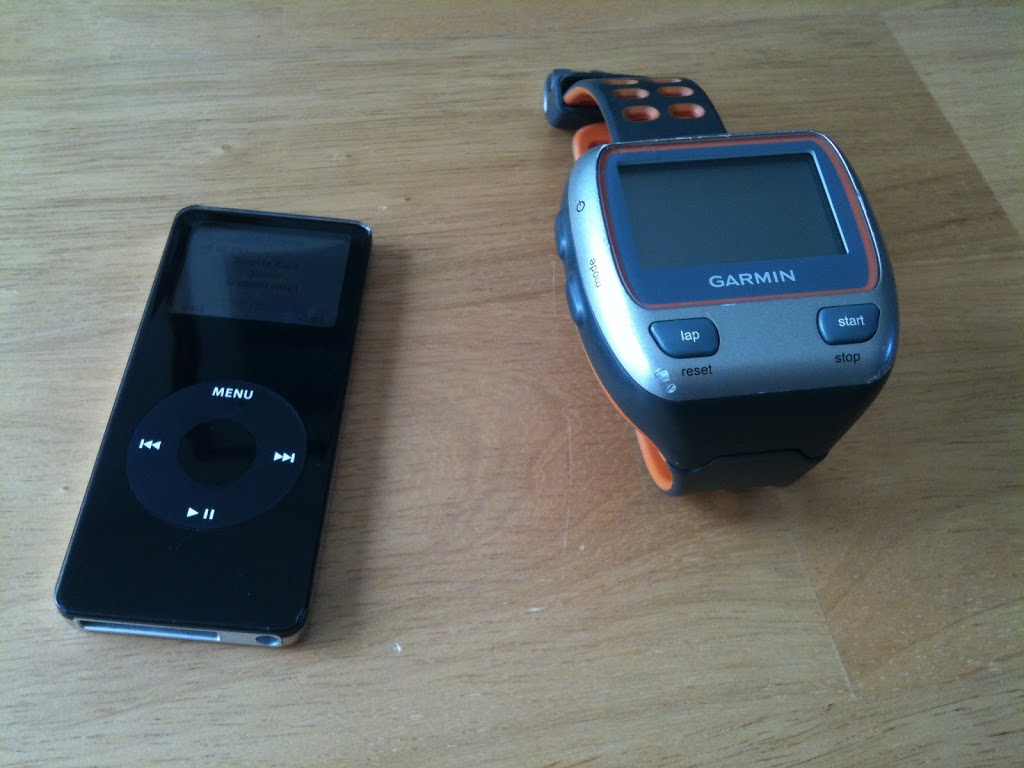
Equally important are the workouts from time to time when you leave technology at home. No Garmin's or Polar watches to measure the above data items, no iPods or smart phones to play your music. Just you, the clothes you exercise in and the additional items needed to complete the exercise are all that is needed. After a good warm up of 10-15 minutes, just allow yourself to settle into what ever pace your body/mind is feeling like for that particular day. Do your best to tune into your surroundings both on what you see, and what you hear and continue to adjust the pace as your body dictates.
In addition to leaving the technology at home here are a few other things you can incorporate a workout that can help you just enjoy the the exercise experience and add a little variety
- Try taking a different route on your next ride/run or walk.
- Swim in a different lane at the pool or try a new stroke
- Get caught up with a friend you have not seen in a while by going on a "social pace" workout.
- If possible, get off the roads and on the trails
- Focus on the best technique possible since you have no idea how fast/far you are going
The bottom line is that exercise is just good for you. Getting started some days may be the hardest part, but know that you will almost certainly feel better at the end of the workout in both body, mind and spirt.
Make it a great week
Coach Eric
Never stop learning
This past weekend, I had the opportunity to do a beginners cycling clinic for a group of woman here in Fort Collins. The weather cooperated perfectly with warm days, dry roads and gentle breezes. During the 2 1/2 days the main focus was on improving their bike handling skills along with being more comfortable when seated on the bike. By using a combination of lecture, focussing on proper biomechanics/bike fit and a variety of riding drills in an empty school parking lot, they soon were ready to take to the roads for more. Riding in traffic in a small bike lane or no bike lane, can be both frightening and intimidating, but by practicing their new skills they did just fine. The last day culminated with a short climb and descent of the south dam at Horsetooth Reservoir.
All of these woman made a choice to learn something new. This required them to get out of their comfort zone in order to get the most out of the experience. For some that meant taking a hand off the handle bar, or shifting gears. For others, riding with a group of people both in front, beside and behind you was a whole new experience. I would be safe in saying that it was probably more mentally fatiguing than physically as we did cover a lot of information.
So, get out on your bike as the days get longer, take a few minutes each ride, even if you are an experienced rider and just work on a few basic skills. Or better yet, if you are experienced and you see a beginner struggling, extend yourself and offer a little help. We all started with training wheels at one time and last time I checked, put on our cycling shorts one leg at a time too!
Keep the rubber side down,
Coach Eric
Maximize your training