
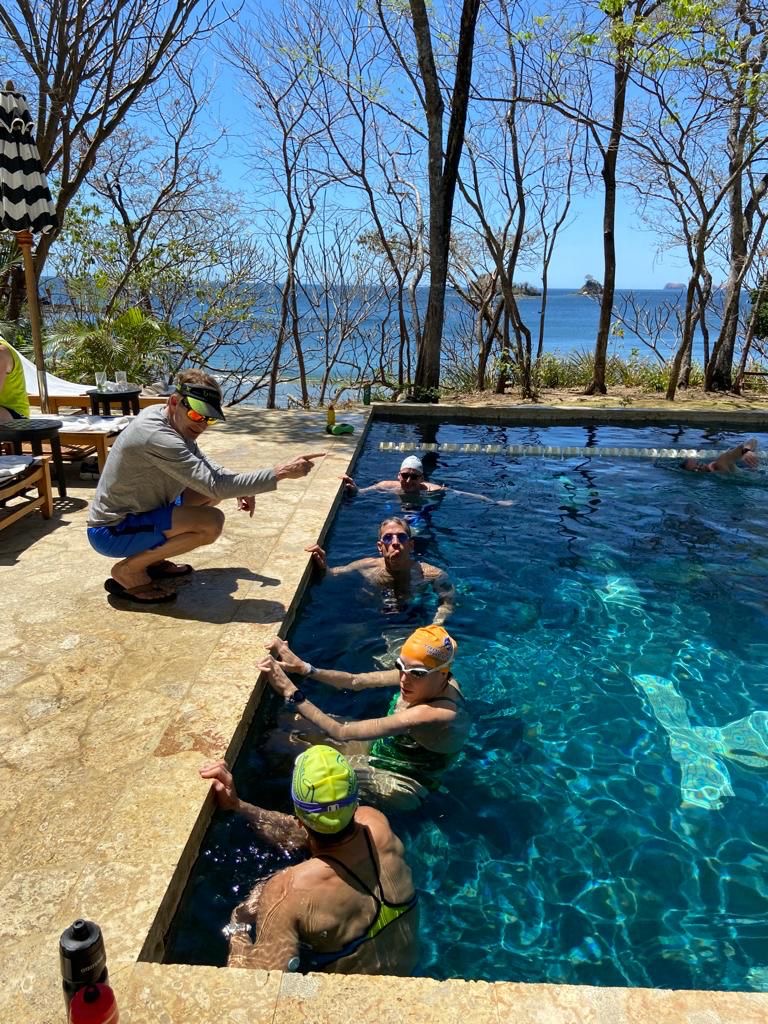
Recently I was on a podcast with Chris Webb at Gain Swim talking about a number of things related to masters swimming and how to help club coaches better understand the masters athlete and the different ways a masters program can help their team. Todays blog post was inspired by the podcast and
There’s an old saying, those that fail to plan, plan to fail. If you want to build your program and more importantly keep your swimmers coming back, you need to set up the pool for a successful practice. This, combined with lane flow management, will lead to great workouts! Here are three things you can do to help keep your practices safe, fun and challenging:
- Writing the Workout - First, identify the type of session: Free, IM, Sprint, Mid-Distance, etc. Next, provide a general warmup of ~ 10 minutes and on sprint days even more. Masters have many different warm up needs (with some talking more than swimming!) so let them do what works best for them during the general warm up. Next it’s time to get to work with a Pre-Set to help transition heart rate and/or work on a particular skill. Finally, write 1-2 main sets and enough time for a proper cool down.
- How to Explain: WHITE BOARD- write legible, write BIG and use black, blue or other contrasting colors that show up best for aging eyes. PRINTED - another option is to print the workout in a BIGGER FONT so that each lane can have it for easy reference. This helps those that cannot see the white board and swimmers whose learning style works best this way. VERBAL - talk to the whole group at the beginning of practice followed by individual lanes and then specific individuals as needed–plan to incorporate all three. Highlight intervals, number of reps and lane order suggestions. Key point: make sure the lane leader knows what to do and give short cues to help with technique or questions about the set (ex. descending, building, fast walls, maximize streamlines, work underwaters, etc.).
- How to Execute: VISUAL DEMOS - Often very helpful to have an experienced swimmer in the workout demonstrate technique or a specific drill. VIDEO - Seeing the correct way to do something via team email or social media provides ongoing feedback and reinforcement. Also, providing exclusive video of themselves when possible adds value and helps them understand adjustments for success. Visual Demos are a great opportunity for peer coaching during practice and building team camaraderie while learning together. Lastly, MANAGE THE FLOW - This is what separates good coaches from great coaches and deserves a separate blog! A great coach will monitor flow and make micro adjustments continuously–swimmer order, intervals, repeats, set objectives, etc. to fine tune the session, demonstrate active participation and maximize the swimmer experience. A fully present, engaged, high energy coach shows commitment to the team and sets the tone for a positive team culture.
By setting the pool up for success, your practices will run smoothly and swimmers will feel a sense of belonging to a community that keeps them coming back for more. What are you doing to set your team up for success and manage the flow in order to give your swimmers the best possible experience?
0 Comments